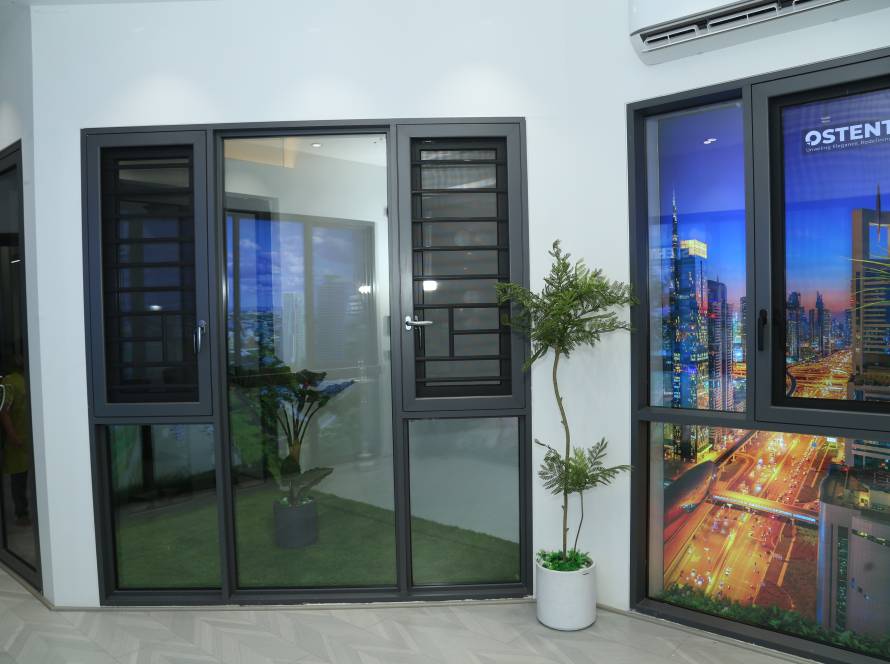
If your AC runs for hours during summer but your room still feels warm, your windows could be contributing to the problem. Upgrading to thermal-break aluminium windows can make a significant difference in maintaining a comfortable indoor temperature. Aluminium is widely used for windows because it is strong, durable, lightweight, and requires relatively little maintenance. However, aluminium is also a good conductor of heat. In a conventional aluminium window, this can allow heat from outside to travel through the frame and contribute to indoor heat gain.
This is where thermal-break aluminium windows can make a difference.
The thermal break acts as a barrier between the indoor and outdoor environments. It helps reduce the transfer of heat between the two sides, allowing the temperature inside your room to remain more stable and less affected by outdoor temperature changes. In simple terms, the heat outside stays outside, and the cool temperature maintained inside stays inside for longer. The thermal break does not create cooling or heating—it simply helps slow down unwanted heat transfer and supports a more comfortable indoor temperature.
How Do Aluminium Windows Affect AC Efficiency?
Think of your window as part of your home’s thermal barrier. On a hot day, the external aluminium frame can become significantly warmer than the indoor environment. In a conventional aluminium window, the inner and outer sections of the frame are directly connected, allowing heat to travel through the aluminium. This process is known as thermal bridging.
When more heat enters the room, the AC may need to work harder and for longer periods to maintain the desired indoor temperature. However, the actual impact on your electricity consumption depends on several factors, including window size, glass specification, sun exposure, room insulation, air leakage, and AC usage.
So, aluminium windows do not automatically mean higher AC bills. The design and performance of the complete window system matter.
What Is a Thermal Break Aluminium Window?
A thermal break aluminium window is designed to reduce heat transfer through the aluminium frame. Instead of having one continuous aluminium connection between the exterior and interior sections, a thermal insulating material—commonly a polyamide strip—is placed between them. This creates a thermal barrier between the outside and inside of the frame.
In simple terms: Regular aluminium frame → more direct heat transfer
Thermal break aluminium frame → reduced heat transfer through the frame
This can improve thermal insulation and indoor comfort, particularly in buildings exposed to high outdoor temperatures.
Thermal Break vs Regular Aluminium Windows

Feature Regular Aluminium Thermal Break Aluminium Heat transfer through the frame is higher. Reduced thermal insulation, limited better indoor comfort. It depends on the overall system. Generally improved, suitable for high heat exposure. Depends on design Often advantageous, the initial cost is generally lower. Generally higher.
A thermal break system is not automatically necessary for every window. Its value depends on the building, climate, window size, orientation, glazing, and cooling requirements.
Do You Need Thermal Break Windows?
Consider these three questions:
1. Does the room receive strong direct sunlight?
West-facing and heavily sun-exposed rooms can experience significant solar heat gain.
2. Does the room have large areas of glass?
Large sliding doors, floor-to-ceiling windows, and extensive glazing can have a greater effect on the room’s thermal performance.
3. Does the AC run for several hours a day?
The benefits of better thermal insulation can become more relevant when cooling demand is high.
If you answered yes to two or more, it may be worth considering a thermal break window system.
The Glass Matters Too
A high-performance frame alone cannot determine the thermal performance of a window. The glass specification is equally important. Depending on the project, options such as double glazing, insulated glass units (IGUs), or solar-control glass can help manage heat transfer and solar heat gain.
For this reason, choosing a window should not be based only on the aluminium profile. The frame, glass, seals, hardware, and installation should be considered as one complete system.
Installation Is Part of Window Performance
Even a well-designed thermal break window can lose performance if it is poorly installed. Gaps around the frame, inadequate sealing, or incorrect installation can allow unwanted air and heat to enter the space. Proper measurement, fabrication, sealing, and installation are therefore essential for achieving the intended performance of the window system.
Why Choose Ostenta Thermal Break Windows?
At Ostenta Decor, we approach aluminium windows as complete systems rather than simply aluminium frames.
Our thermal break window solutions combine thermal break aluminium profiles, suitable high-performance glazing, precision hardware, sealing, and professional installation to create windows designed for comfort, performance, durability, and premium aesthetics. The right specification depends on your home’s orientation, window size, glass requirements, climate, and cooling needs. Our team can help identify the appropriate window and glazing configuration for your project.
Frequently Asked Questions
1. Do aluminium windows increase electricity bills?
Not necessarily. The effect depends on the window’s frame design, glass, size, orientation, insulation, air leakage, and AC usage. Conventional aluminium frames can transfer heat more readily, while thermal break systems are designed to reduce heat transfer through the frame.
2. What is a thermal break in an aluminium window?
A thermal break is an insulating barrier, commonly made from polyamide, placed between the exterior and interior aluminium sections of a window frame. It reduces direct heat transfer through the frame.
3. Are thermal-break aluminium windows worth it in India?
They can be particularly useful for homes and buildings exposed to high temperatures, strong sunlight, large glazing areas, or extended AC usage. The right choice depends on the project’s specific requirements.
4. Can thermal break windows reduce my AC bill?
Thermal break windows can reduce heat transfer through the frame and may reduce cooling demand. However, the actual impact on electricity consumption varies from one building to another and depends on factors such as glass, insulation, solar exposure, window area, and AC usage.
5. Which is better: thermal break or regular aluminium windows?
Neither is universally better for every project. Regular aluminium windows can be suitable where thermal requirements are moderate. Thermal break systems are generally more appropriate when improved thermal insulation and indoor comfort are important considerations.
6. Do thermal break windows need special glass?
For the best overall thermal performance, the glazing should be selected along with the frame as part of the complete window system. Depending on the project, double glazing, insulated glass, or solar-control glass may be considered.
Final Thoughts
Your AC may not be the only factor affecting indoor comfort and cooling demand. Windows play an important role in controlling how much heat enters your home. If you are choosing aluminium windows for a new home or replacing existing windows, look beyond the frame material. Consider the thermal break, glass specification, sealing, installation quality, and overall window system.
At Ostenta Decor, we help homeowners and architects choose aluminium window systems designed around the specific performance and aesthetic requirements of their projects.